Training treats are one of those things that sound simple until you're standing in a pet shop staring at forty different options with no idea which one is actually going to make your dog pay attention. Here's what you actually need to know.
What Makes a Good Training Treat?
Training treats are different from regular treats. You're going to be giving a lot of them in a single session, so the rules are different. A good training treat is:
- Small — pea-sized or smaller. You want the reward without filling your dog up in the first ten minutes
- Soft — something they can swallow quickly and get back to focusing on you
- Smelly — high-value scent keeps motivation high. This is why cooked chicken, cheese, and liver treats work so well
- Consistent — your dog should know exactly what they're getting
The Best Natural Options for Training
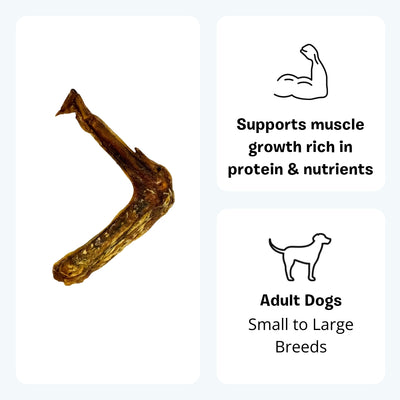
Soft meat treats — air-dried or semi-moist meat treats (chicken, beef, duck, venison) are usually the gold standard. High protein, strong smell, soft enough to eat fast.
Cheese — a small cube of cheese is one of the most reliable training rewards going. Use sparingly though — it's high fat.
Cooked chicken — plain cooked chicken breast, cut into tiny pieces, is probably the single most effective training treat for most dogs. No salt, no seasoning. Just chicken.
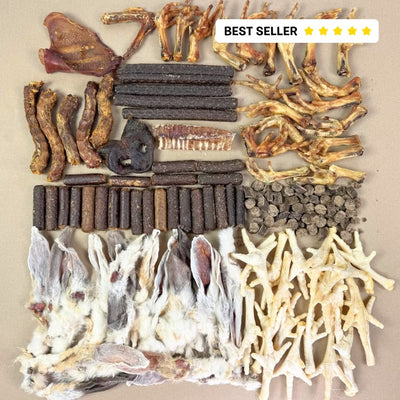
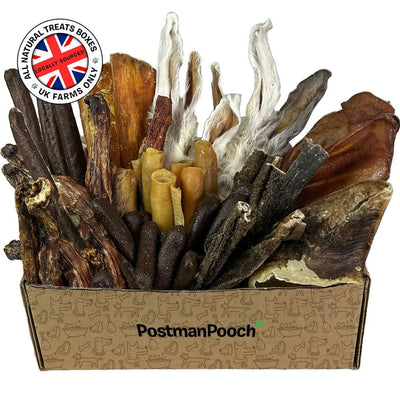
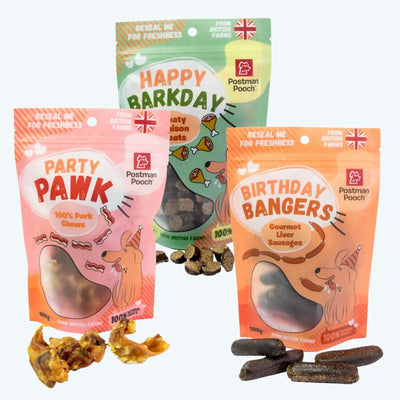
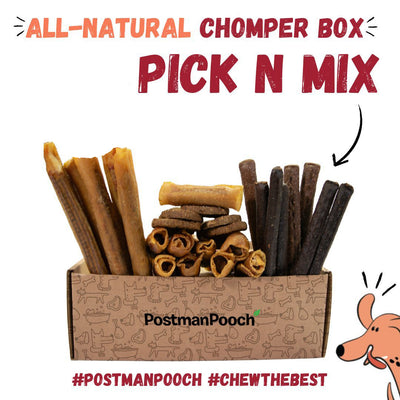
Some of our natural dog treats can be broken into smaller pieces for training use — particularly the softer dried meat varieties.
What to Avoid for Training
- Hard biscuits — too much chewing time between repetitions, breaks the flow
- Large treats — you'll either run out fast or overfeed significantly
- Treats with lots of sugar or additives — can cause energy spikes that work against calm focus
- Anything your dog is indifferent to — if they'll eat it but aren't excited, find something better
High Value vs Low Value Treats
Not all training moments are equal. Having a tiered system works well: low value (regular kibble) for easy familiar tasks; medium value (soft natural treats) for new skills; high value (cooked chicken, cheese, premium meat treats) for difficult behaviours or high-distraction environments.